support@registrationkraft.com


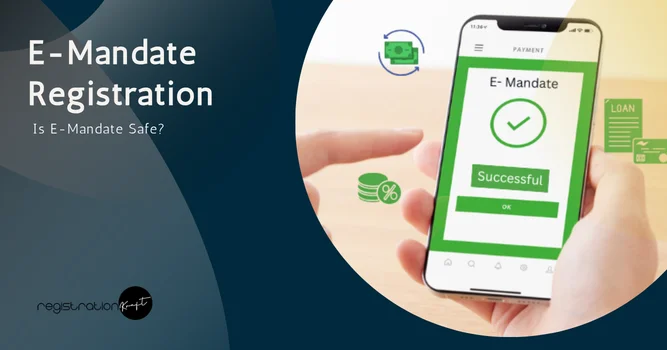

The lives of individuals, whether they have their own business or work as employees, are getting busier by the day. Many times, it becomes difficult to focus on your job/business when there are so many other things to take care of. There are loan repayments, OTT subscriptions, internet plans, electricity bills, water bills, pipeline bills and mutual fund SIPs to keep track of. The entire list can feel endless. How much can a person possibly remember? Whether we talk about a delayed electricity bill or a missed loan repayment, missing even one payment/installment can sometimes result in late fees/penalties
This is where e-Mandate registration can be your superhero. It can help you handle these recurring payments automatically without requiring your manual intervention at all. To explain it to you simply, e-mandate registration means a digital process that allows you to authorize your bank to automatically make recurring payments from your bank account on your behalf.
What is an E-Mandate?
A mandate means an authorised permission given to someone to act on your behalf. An e-mandate is simply the digital version of this. Basically, it means giving a standing instruction that allows your bank to automatically debit your account for recurring payments.
E-mandate makes life much easier by taking care of the regular payments automatically. You do not have to remember every due date when you adopt e-Mandate as your saviour. However, one thing you need to ensure from your end is that you have sufficient balance in your bank account whenever the payment is due.
Recently, BHIM App launched MyUPI AI Assistant. Using this assistant, the app users can view and check their e-mandate details easily.
Why Does E-Mandate Matter So Much?
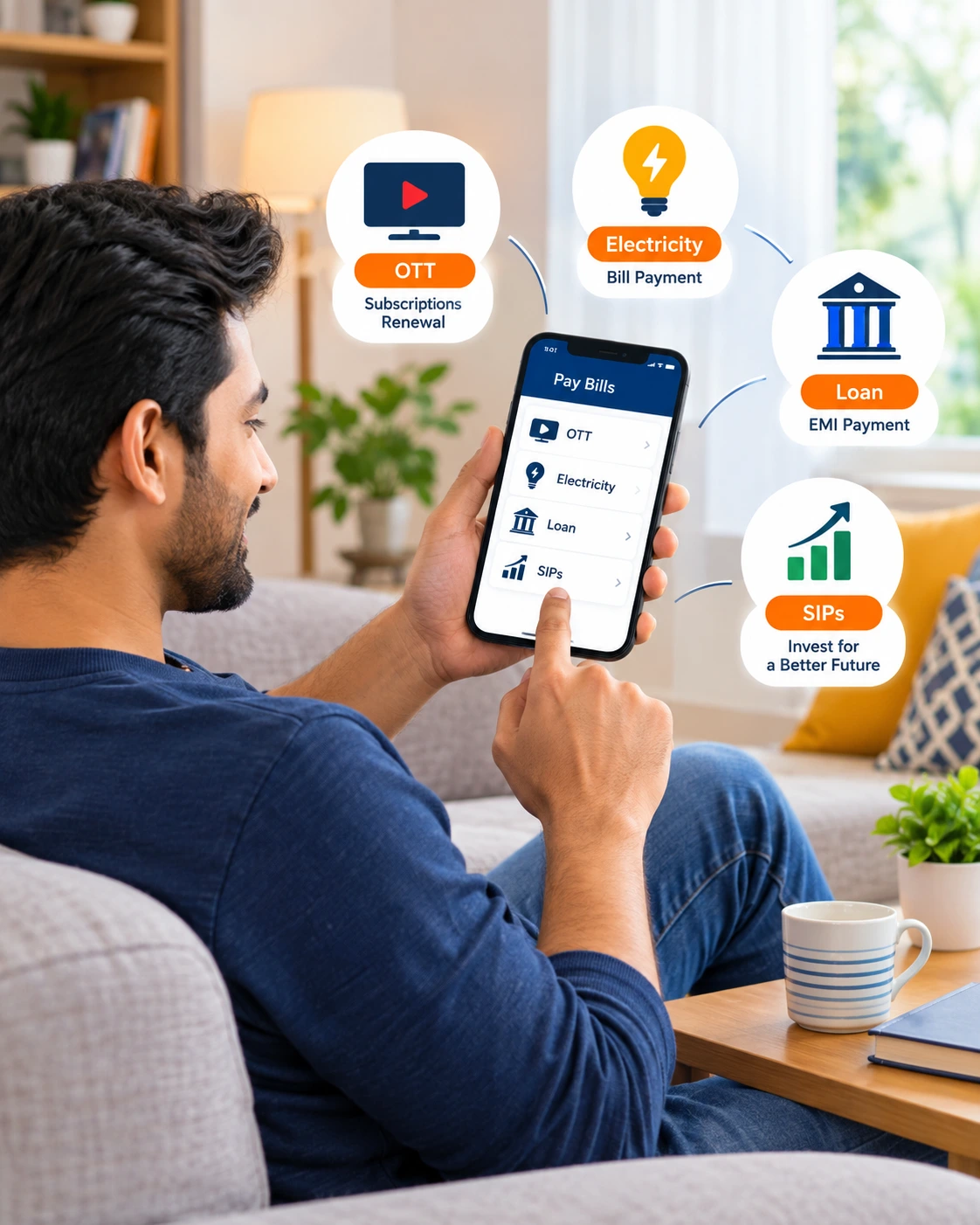
To understand importance of e-mandate, let’s take a simple example. Suppose you have a Netflix subscription or any other OTT subscription, such as Amazon Prime or JioHotstar, whichever you prefer. Without an e-mandate, you would need to remember renewal date and make payment yourself, whether subscription is monthly, half-yearly or annual. If you forget to make payment in a timely manner, your subscription may stop and you could lose access to your favourite movies/series until you make the required payment for subscription renewal.
AI Generated Image
All this fuss can be avoided with an e-mandate. It automates payment so you do not have to remember renewal date or make payment manually. While an OTT subscription is a simple example, there are many other recurring payments that can be even more important, such as electricity and water bills, telephone bills, loan repayments, EMIs, mutual fund SIPs and recurring deposits to name a few.
Benefits of e-Mandate
An e-mandate may be a simple arrangement but it can be very useful. Here are a few benefits of registering the mandate:-
- It helps you avoid missed payments and potential late payment charges and the headache that comes with making recurring payments manually.
- It can also help prevent situations where an important payment is missed, such as an insurance premium, which could have serious consequences for your policy (like policy lapse).
- Setting up an e-mandate is a digital process and usually does not require branch visits.
- You are at peace of mind when you know your important payments will get deducted automatically and in a timely manner through e-mandate.
How to Set Up E-Mandate Registration?
After learning why e-mandate matters so much, you might feel convinced that you want to set one up. So, now you must be wondering, “how can I complete e-mandate registration?”
Well, the process is quite convenient as it is fully digital. The exact steps may vary depending on your bank/service provider but generally you can follow below-mentioned steps to complete e-mandate registration process:-
Step 1:- Choose the Service
First, you need to decide what exactly you want to automate. Is it a loan repayment, car or home EMI, phone or utility bill, OTT subscription, news subscription or some other recurring payment? Once you know which payment you want to automate, you can then proceed with e-mandate registration.
Step 2:- Visit Bank or Service Provider’s Platform
Most major banks and service providers offer a digital process for setting up e-mandates. You can usually initiate the process through their website, mobile app or payment platform without having to visit their branch in person.
Step 3:- Authentication of Mandate
Once you initiate mandate, you will then need to authenticate it as a security measure. Depending on bank or service provider, you may be asked to verify your identity using methods such as net banking, debit card details or OTP. This verification helps confirm that you are the person authorising recurring payment from your account.
Step 4:- Approval & Activation
Once necessary verification is completed and mandate is approved, your e-mandate will be finally activated and linked to your bank account. Thereafter, specified amount will be automatically debited according to agreed schedule and due dates.
E-mandate registration is a fairly simple process but it can be extremely useful when it comes to managing your regular payments without having to remember every single due date.
Is E-Mandate Safe?
Yes. E-mandate is designed to be safe and secure. To ensure transactions are secure, India’s central bank, the Reserve Bank of India, has set forth strict guidelines for e-mandate. To keep your money safe, e-mandates have security measures in place such as multi-factor authentication. Real time payment notifications are also provided such as when money gets deducted through an e-mandate. This helps you keep track of your transactions.
Also, even with an e-mandate, you are still in control. If you want to stop it, you can cancel it through your bank or service provider’s app or portal, depending on the process they’ve prescribed. So, suppose you don’t want a Netflix subscription anymore and want to shift to another OTT platform like Amazon Prime.
You can stop the e-mandate for your Netflix renewal and start a new one for Amazon Prime. In this way, e-mandate gives you convenience of automatic payments while promising that you still remain in control of what you want to pay for.
Who Should Consider E-Mandates?
Individuals should take consider e-mandates if:-
- They often forget payment due dates:- If you tend to forget the due dates for important payments like mutual fund SIPs, home loans, education loans, utility bills, etc., e-mandates can make things a lot easier for you.
- They have multiple recurring payments:- Having multiple recurring payments means more tedious work for you. When you have to sit and pay all of them manually, you happen to feel more drained. E-mandates can take care of all of these payments automatically.
- They want to avoid late fees:- Missing the due date for certain payments like utility bills can sometimes result in late fees. But with e-mandate in place, you can easily avoid the headache that comes with remembering every due date and reduce the chances of missing a payment to a great extent.
Ending Note
E-mandate is a pretty simple yet highly effective way to make your regular payments more convenient. It gives you peace of mind by reducing chances of missing out on payment due dates. It also does away with need to make recurring payments manually every single time. If you think you can benefit from it, go ahead and opt for e-mandate registration by following steps we explained in this blog post. Just a simple process could make managing your recurring payments and your life much easier!
Frequently Asked Questions (FAQs)
Q1. What is e mandate in mutual fund?
A. In the context of mutual funds, an e-Mandate is a standing instruction that allows the specified amount to be automatically debited from your bank account towards a mutual fund scheme on your behalf.
Q2. Can I complete e-mandate process at a bank’s branch?
The e-mandate process is generally completed online through the bank/service provider’s platform. However, if you face any issues while setting it up online through the app or platform, you can visit your bank branch and ask bank relationship manager to help you.
Q3. Can I cancel an e-mandate if I no longer need it?
A. Yes, of course. You can cancel an e-mandate if you feel like you no longer need it. The exact process for e-mandate cancellation may vary depending on your bank/service provider.