support@registrationkraft.com


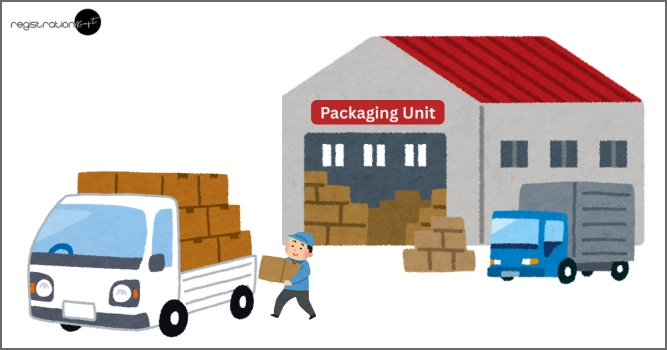

Starting a packaging company in India involves securing a range of licenses to comply with national and state regulations, particularly as the industry evolves with e-commerce, sustainability mandates, and stricter quality controls. This comprehensive guide expands on essential licenses, delves into the lucrative benefits of entering the packaging business, and provides key industry facts with references, drawing from the latest regulatory and market insights as of 2026. Whether you’re eyeing flexible packaging, rigid boxes, or eco-friendly alternatives, understanding these requirements is crucial for smooth operations and growth.
Packaging Business: Overview
Launching a packaging business demands meticulous compliance, as requirements vary by business type (manufacturing, trading, or food-contact), scale, location (e.g., Faridabad in Haryana), and materials used (plastic, paper, metal). Non-compliance can lead to fines up to Rs. 5 lakhs or shutdowns under acts like the Legal Metrology (Packaged Commodities) Rules, 2011. Here’s a detailed breakdown.
Essential Registrations to Start Packaging Business
GST Registration: Every packaging business must register if annual turnover exceeds Rs. 20 lakhs (Rs. 10 lakhs in special category states). Use HSN codes like 4819 for cartons or 3923 for plastic containers. The process is online via the GST portal: submit PAN, Aadhaar, bank details, and proof of business address. It takes 3-7 days, enabling input tax credits and interstate sales. For packaging services, it’s mandatory regardless of turnover if supplying to registered dealers.
Legal Metrology Packer/Manufacturer License (LMPC): Under the Legal Metrology Act, 2009, this is non-negotiable for pre-packaged goods. It ensures accurate labeling of net quantity, MRP, and manufacturer details. Apply to the state Controller of Legal Metrology within 30-90 days of starting; fees range from Rs. 500-5,000 based on turnover. Documents include partnership deed, site layout, and machinery list. Renewal is annual, with inspections verifying weighing scales. Apply Here for LMPC Certificate.
Udyam/MSME Registration: Though voluntary, it’s a game-changer for subsidies, low-interest loans (e.g., via PMEGP), and priority lending. Register free on udyamregistration.gov.in using Aadhaar-linked PAN. Micro units (investment < Rs. 1 crore, turnover < Rs. 5 crores) qualify easily. Benefits include 50% machinery cost subsidy and easier tender access.
Manufacturing-Specific Licenses
For factories producing boxes, pouches, or containers:
Factory License: Issued under the Factories Act, 1948, by the state labour department (e.g., Haryana Labour Dept for Faridabad). Required if employing 10+ workers with power or 20+ without. Submit building plan, machinery details, and health/safety certifications. Validity: 5 years; fees: Rs. 1,000-10,000. Ensures worker welfare, ventilation, and fire safety.
Pollution Control Board Clearances: State PCB (e.g., Haryana SPCB) mandates Consent to Establish (CTE) before setup and Consent to Operate (CTO) post-trial. Plastic packaging falls under ‘Orange’ category; paper under ‘Green’. Submit EIA report, effluent treatment plan, and emissions data. Fees: Rs. 10,000-1 lakh; validity 1-5 years. Post-2025 plastic waste rules emphasize recycling.
Fire NOC: From state fire services, verifying extinguishers, hydrants, and exits. Critical for flammable materials like plastics.
Similar Post: What is Trade License Registration
Food and Pharma Packaging Add-Ons
If handling food-grade materials:
FSSAI License: Regulated by Food Safety and Standards Authority of India. Basic (turnover < Rs. 12 lakhs: Rs. 100/year), State (Rs. 12 lakhs-20 crores: Rs. 2,000/year), Central (> Rs. 20 crores or exports: Rs. 7,500/year). Requires lab-tested materials for migration limits (e.g., <10 mg/dm² for plastics). Apply online with layout, machinery photos, and water test report. Mandatory for primary food packaging; includes annual audits.
BIS Certification: For plastics (IS 10146), aluminum foils (IS 15392). Ensures quality standards; apply via BIS portal.
Other Compliances
- Shops & Establishments Act: State-specific for non-factory operations.
- ESI/PF Registration: For 10+ employees.
- IEC Code: For exports, via DGFT.
- Timeline: 1-3 months total. Costs: Rs. 20,000-1 lakh initially.
Step-by-Step Setup Process to Start Packaging Company
- Business Structure: Choose Sole Proprietorship (simple), Partnership, LLP, or Pvt Ltd via MCA portal (Rs. 5,000-20,000). Register Your Company Now.
- Location Scout: Industrial areas like Faridabad offer incentives; check zoning.
- Apply Licenses Sequentially: Start with GST/Udyam, then LMPC/CTE.
- Machinery Procurement: Corrugated plants (Rs. 50 lakhs+), flexo printers.
- Hire & Train: Focus on quality control teams.
- Marketing: Target FMCG via IndiaMart, Alibaba.
Benefits of Entering Packaging Business
The packaging sector stands out for its recession-proof nature and high ROI, fueled by India’s consumption boom. Here’s why it’s ideal for entrepreneurs like content creators diversifying into manufacturing.
High Demand and Scalability
E-commerce (Flipkart, Amazon) drives 30%+ annual demand for corrugated boxes, while FMCG/pharma needs 50 billion units yearly. Start small (home-based paper bags) and scale to automated lines. Low land needs (500-2,000 sq ft) suit urban setups like Faridabad.
Profit Margins and Revenue Potential
Gross margins: 20-40%. A Rs. 50 lakhs investment yields Rs. 1-2 crores turnover in Year 1. Custom eco-packaging adds 15-20% premiums. Recurring clients (e.g., biscuit makers) ensure steady cash flow; payback in 1-2 years.
Government Support and Incentives
PLI Scheme 2021-26 allocates Rs. 4,415 crores for food processing, offering 6-10% incentives. MSME loans at 7-9% interest. Haryana’s industrial policy provides land subsidies, power rebates. Sustainability push (e.g., biodegradable mandates) favors innovators.
Sustainability Edge
Shift to green packaging (bagasse, recycled PET) aligns with 2025 single-use plastic ban extensions. Export potential to Middle East/EU, where eco-norms boost premiums by 25%. Low competition in niche segments like pharma blister packs.
Job Creation and Diversification
Generates 2-5 jobs per small unit; links to printing/branding services, synergizing with digital marketing skills. Resilient to downturns—packaging is essential, unlike luxury goods.
Risks like raw material volatility (kraft paper up 10% in 2025) are offset by hedging and bulk buys.
Industry Facts and Statistics
India’s packaging market is a USD 50+ billion powerhouse, growing amid Atmanirbhar Bharat.
| Metric | Value | Projection | Key Driver |
| Overall Market Size | USD 50.5 billion (2025) | USD 82 billion by 2030 (CAGR 10.5%) | E-commerce, retail boom |
| Flexible Packaging Share | 42% of market | CAGR 11% to 2030 | Snacks, liquids |
| Sustainable Segment | USD 10.2 billion (2025) | USD 17.7 billion by 2034 (CAGR 6.31%) | Regulations, consumer shift |
| Per Capita Consumption | 15 kg (plastics) vs. 50 kg global | Double by 2030 | Urbanization |
| Employment | 10 million direct jobs | +2 million by 2027 | MSME growth |
| Export Value | USD 4 billion (2025) | USD 7 billion by 2030 | Pharma, food |
Post-2025, regulations like PWM Rules 2016 (amended) mandate 100% PET recycling by brands, spurring demand for compliant suppliers. E-commerce packaging waste hit 5 million tonnes in 2025, pushing reusable innovations. Top players: Uflex, Huhtamaki; MSMEs hold 60% share.
Challenges and Success Tips
Challenges: Raw material imports (40% dependency), power costs, skilled labor shortage.
Tips:
- Partner with suppliers via IPPAI association.
- Adopt ERP for inventory.
- Focus on SEO-optimized websites for B2B leads, leveraging your digital expertise.
- Target niches like organic food packaging in Haryana’s agro-belt.
Conclusion
A packaging venture promises 25-30% ROI with minimal entry barriers, backed by India’s 7% GDP growth. Secure licenses proactively, tap MSME perks, and innovate sustainably for long-term success.
Also Read: How to start a broadband company?