support@registrationkraft.com


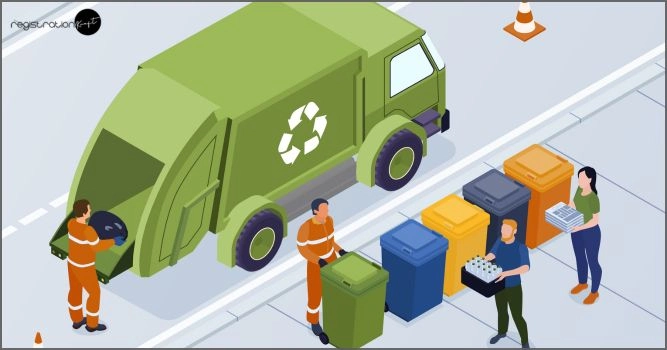

Solid waste management means the proper handling of waste materials from the time they are created until they are finally disposed of. Its main aim is to protect human health and keep the environment clean. It involves different steps such as collecting waste, storing it, transporting it, treating it, and finally disposing of it safely. The waste can include household garbage, industrial waste, packaging materials, and construction debris.
Good solid waste management begins with reducing waste at the source. This means people and industries should try to produce less waste by using fewer resources and avoiding extra packaging. After that, waste should be properly separated into different categories like wet waste, dry waste, recyclable waste, and hazardous waste. It should be stored in closed bins and then safely collected and transported to treatment or disposal areas. This process helps to control bad smells, prevent the spread of diseases through pests, and protect soil and water from pollution.
Types of solid waste management
Solid waste management refers to the systematic handling, treatment, and disposal of solid materials generated from homes, industries, institutions, agriculture, and other activities. Broadly, the “types” of solid waste management can be understood in two ways: (1) by source/category of waste and (2) by technical methods used to treat or dispose of it.
Types by source/category
- Municipal solid waste (MSW): Household garbage, street sweepings, and institutional waste managed by city authorities.
- Industrial waste: By‑products from factories and plants, including metals, plastic waste, and chemical sludge, often requiring special treatment.
- Hazardous waste: Toxic, flammable, corrosive, or reactive waste (e.g., chemicals, batteries, electronic waste) that needs secure handling and disposal.
- Agricultural waste: Crop residues, animal manure, and leftover pesticides, which can be composted or converted into biogas.
- Biomedical waste: Wastes from hospitals, clinics, and labs (syringes, tissues, cultures) that must be sterilized or incinerated to prevent disease spread.
Solid Waste Management Methods
Treatment and disposal methods include composting organic waste, recycling paper, plastic, glass, and metal, and scientifically managed landfills or incineration where applicable. Good solid waste management also follows principles like “reduce, reuse, recycle, recover, and residual management” to recover resources and energy from waste. Overall, it aims to reduce pollution, prevent disease outbreaks, and conserve natural resources in rapidly urbanizing areas.
- Landfilling: Waste is buried in engineered, sanitary landfill sites layered with soil to reduce pollution and allow controlled decomposition.
- Incineration: Burning waste at high temperatures reduces volume and, in modern plants, can generate heat or electricity, though emissions must be controlled.
- Composting & vermicomposting: Organic waste is biologically decomposed into nutrient‑rich compost using microbes or earthworms for use in agriculture.
- Recycling & reuse: Materials such as paper, plastic, metal, and glass are collected, sorted, and reprocessed into new products, conserving resources.
- Waste‑to‑energy and MBT: Advanced systems combine sorting, biological treatment, and energy recovery to reduce landfill use and recover materials or energy.
Together, these categories and methods form an integrated solid waste management system aimed at health protection, pollution control, and resource recovery.
Solid Waste Managment Rule 2026
The Solid Waste Management Rules, 2026, notified by the Ministry of Environment, Forest and Climate Change, will come into effect from April 1, 2026, replacing the earlier 2016 rules. These updated rules focus on building a circular economy by promoting better waste segregation and accountability. They make it compulsory to separate waste into four categories—wet, dry, sanitary, and special care waste—right at the source.
The rules also introduce stricter responsibilities for bulk waste generators and ensure proper waste collection, transport, and processing through an online tracking system. Additionally, industries are encouraged to increase the use of Refuse Derived Fuel (RDF), and local authorities are given clear duties to improve waste management systems. The rules also emphasize reducing landfill waste, cleaning up old waste sites, and applying the “polluter pays” principle, making waste management more efficient and environmentally responsible across India.
Projects on solid waste management in India
India has several notable projects addressing solid waste management challenges through government, corporate, and community efforts. These initiatives focus on recycling, segregation, and zero-waste models in urban and rural areas. Here is a curated list of key projects based on recent developments.
Government-Led Projects
- Swachh Bharat Mission (SBM): Nationwide cleanliness drive launched in 2014, promoting waste segregation at source, scientific processing, and modern waste management infrastructure across urban and rural India.
- GOBAR-Dhan Scheme: Started in 2018, converts cattle dung and organic farm waste into biogas, bio-CNG, and compost, enhancing rural waste recycling.
- Integrated Solid Waste Management Plant, Saligao (Goa): India’s first zero-waste philosophy plant using advanced technology for complete waste processing, serving as a model for other regions.
Corporate CSR Initiatives
- Solid Waste Management Project, Maharashtra (India Sanitation Coalition): Five-year effort in cities over 1 million population, targeting plastic waste reduction, zero landfill, and informal worker livelihoods.
- Waste Solutions for a Circular Economy: Operates in Bengaluru, Patna, Tiruchirappalli, Varanasi, and Goa; builds source segregation, MRFs, and organic waste plants for low-carbon waste transformation.
- Lighthouse Initiative, Vadnagar (Ambuja Cements): Manages solid/liquid/plastic waste in Gujarat village, expandable to 75 Gram Panchayats under Swachh Bharat Mission Grameen Phase II.
- Project बिनMalba, Gurugram (NatWest Group India): Tackles construction & demolition waste; diverts 2000 MT for recycling, reduces illegal dumping, and develops city-wide systems.
- Eco-Gram Waste Plant, Gurugram (Hyundai Motor India Foundation): Processes 2 tons wet and 5 tons dry waste daily, saving landfill costs and powering streetlights with biogas.
Other Notable Efforts
- Flipkart Group’s Zero Waste Facilities: Diverted 3000 tonnes of non-hazardous waste from landfills via TRUE Gold-certified sites, achieving over 90% diversion.
These projects emphasize scalability, technology integration, and public-private partnerships to tackle India’s growing waste crisis.
In conclusion
solid waste management is not just about disposing of waste, but about managing it in a responsible and sustainable way. From reducing waste at the source to proper segregation, recycling, and scientific disposal methods, every step plays an important role in protecting our health and environment. With the introduction of the Solid Waste Management Rules, 2026, India is moving towards a more organized and accountable system that promotes a circular economy and minimizes pollution. Moreover, various government and private initiatives across the country are helping to improve waste management practices and create cleaner communities. If individuals, industries, and authorities work together and follow these practices, we can significantly reduce waste, conserve natural resources, and build a cleaner and healthier future for everyone.