support@registrationkraft.com


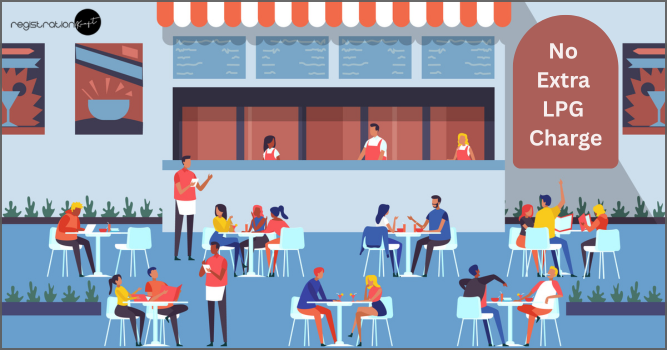

In recent months, many hotels and restaurants across India started adding extra charges like “LPG charges,” “gas surcharge,” and “fuel recovery cost” to customer bills.
One major reason behind this trend is the ongoing US–Israel–Iran conflict, which has disturbed global oil and gas supply. Because of this war:
- Oil and gas prices have increased sharply worldwide
- LPG (cooking gas) supply has been affected in India
- Restaurants are facing higher operating costs
For example, most of India’s LPG imports pass through the Middle East, and due to the conflict, supply delays and price hikes have been reported . In some areas, restaurant operating costs have increased by 20–30% due to rising LPG prices .
To recover these rising costs, some businesses started adding separate charges to customer bills. However, instead of increasing menu prices transparently, they chose to add hidden fees—leading to confusion and complaints from consumers.
That’s where the Central Consumer Protection Authority (CCPA) stepped in. The Authority has released a new advisory under Section 10 of the Consumer Protection Act, 2019, stating that such charges must not be added automatically and warning that strict action will be taken against any violations.
What Action Has CCPA Taken?
The CCPA, under the Consumer Protection Act, 2019, has issued a fresh advisory to hotels and restaurants.
It clearly states that:
- No extra charges like LPG or fuel costs should be added automatically to bills
- Such practices are considered unfair trade practices
- Strict action will be taken against businesses that violate these rules
This step was taken after many complaints were received from consumers through the National Consumer Helpline (NCH) and media reports.
Why Are These Charges Considered Unfair?
Many hotels and restaurants were adding these charges by default, which means customers had no choice but to pay them.
The CCPA has explained that:
- Costs like gas, electricity, and fuel are part of running a business
- These costs should already be included in the menu prices
- Adding them separately creates hidden costs and reduces transparency
In simple terms, if a dish costs ₹200 on the menu, you should not suddenly see extra fuel or gas charges added later.
Important Guidelines for Hotels and Restaurants
The advisory clearly mentions the following rules:
No Automatic Extra Charges
Hotels and restaurants cannot add LPG, gas, or similar charges automatically to your bill.
Menu Price Should Be Final
The price shown in the menu should be the final amount, except for applicable taxes like GST.
No Misleading Customers
Customers should not be:
- Forced to pay hidden charges
- Misled with confusing terms
Even if these charges are given different names, they will still be treated as service charges or extra fees, which are not allowed by default.
What Can You Do as a Consumer?
If you notice such charges in your bill, you have full rights to take action:
Ask for Correction
Politely request the hotel or restaurant to remove the extra charge from your bill.
File a Complaint
You can contact the National Consumer Helpline:
- Call: 1915
- Use the NCH mobile app
Online Complaint
File a complaint through the e-Jagriti portal for consumer disputes.
Report to Authorities
You can also complain to:
- The District Collector
- The CCPA directly
CCPA’s Strict Monitoring
The CCPA has made it clear that it is closely monitoring such practices across India.
Any hotel or restaurant found adding:
- Unauthorized charges
- Hidden fees
- Misleading costs
will face strict legal action under the Consumer Protection Act, 2019.
Conclusion
Eating out at a restaurant or staying in a hotel should be simple—you check the menu, see the price, and pay accordingly. But many consumers in India have recently noticed extra charges like “LPG charges,” “gas surcharge,” or “fuel cost recovery” added to their bills.
Now, the Central Consumer Protection Authority (CCPA) has stepped in and made things clear: these charges are unfair and cannot be added automatically.
This move by the CCPA is a big step towards protecting consumers. It ensures:
- Transparency in pricing
- No hidden charges
- Fair treatment for customers
So next time you dine out, remember—you only need to pay what is clearly mentioned on the menu (plus taxes). If you see anything extra, you now know your rights!
Frequently Asked Questions (FAQs)
Q.1 What are LPG or gas charges in restaurant bills?
These are extra charges added by some restaurants claiming to recover fuel or gas costs used in cooking.
Q.2 Are restaurants allowed to charge LPG or fuel costs separately?
No, the CCPA has clearly stated that such charges cannot be added automatically to the bill.
Q.3 What should be included in the menu price?
The menu price should include all operational costs like LPG, electricity, and staff expenses. Only taxes can be added separately.
Q.4 Is it compulsory to pay these extra charges?
No, you are not required to pay any such charges if they are added without your consent.
Q.5 What should I do if I see such charges on my bill?
You can ask the restaurant to remove them or file a complaint if they refuse.
Q.6 Where can I complain against unfair billing?
You can complain through:
- National Consumer Helpline (1915)
- NCH mobile app
- e-Jagriti portal
Q.7 What is considered an unfair trade practice?
Any practice that misleads consumers or forces them to pay hidden or unauthorized charges is considered unfair.
Q.8 Can restaurants rename these charges to avoid rules?
No, even if the name is changed, such charges are still considered illegal if added automatically.
Q.9 Can service charges still be added?
Service charges are not mandatory and should not be imposed without customer consent.
Q.10 What action can be taken against violating restaurants?
The CCPA can take strict action, including penalties, against businesses that violate these rules.